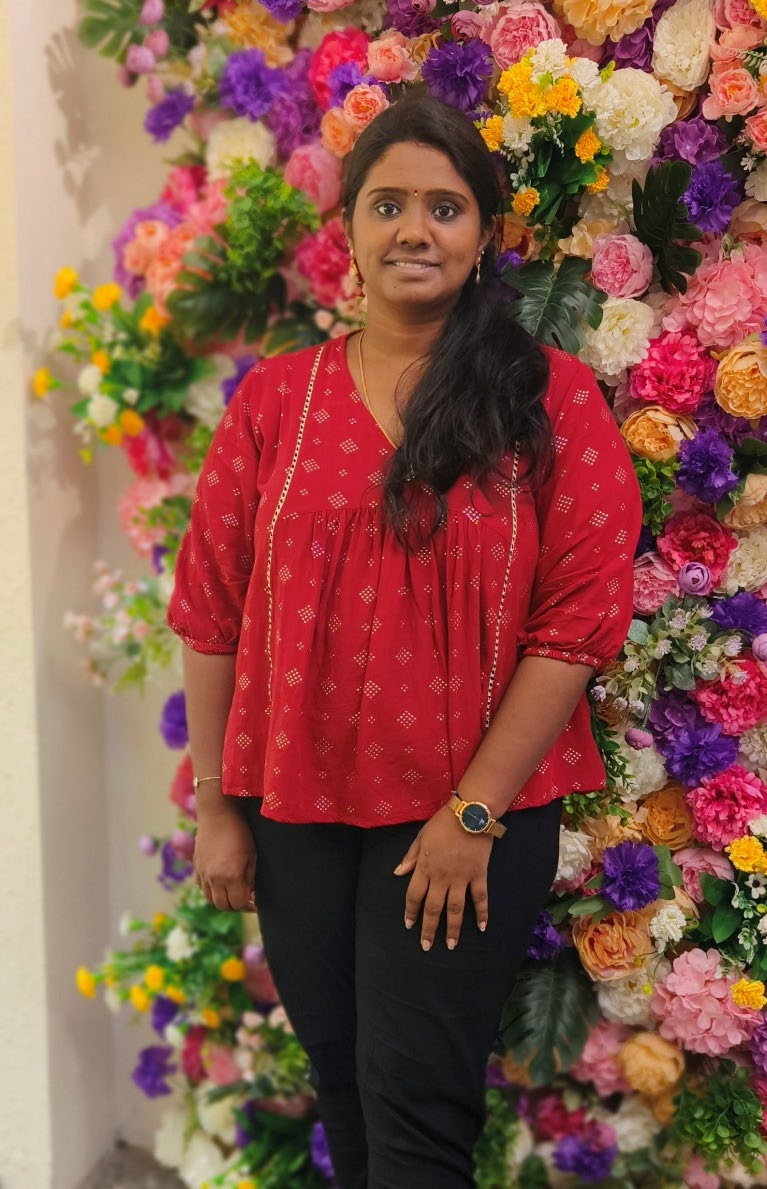
Sharimila K: Finding My Voice as a Technical Writer
31.03.2026 | STVY | Blog
I’m Sharimila, a technical writer from Chennai, India. My journey in documentation started
in a very unexpected way. When I finished college and began my job hunt, I honestly had no
idea what documentation was or what a technical writer even did until I was invited for the
interview. I simply accepted the invitation, hoping to start my career somewhere, and this
role found me.
I started my professional life exploring content-related roles during my internship, where I
was introduced to the idea that writing could go beyond creativity and storytelling and
instead become a bridge between complex technology and real people. That realization is
what led me here.
How I got here:
My academic journey has been diverse. I earned my bachelor’s degree in electrical and
electronics engineering, followed by a master’s in power systems. I also got a chance to
pursue a master’s in counseling psychology, and I’m currently completing my MBA in
operational management, both through distance mode.
And like many technical writers in India, I too graduated with a degree that was not titled
“Technical Writing.” My first exposure to documentation came during my early professional
years, when I began working closely with engineering teams.
What’re my thoughts on documentation?
Over the years, I got the chance to work with different teams, learn new tools, and handle
various types of documents. Each task taught me something. I learned how important
accuracy is, how to break down complex steps, and how to write in a way that serves
everyone, no matter what their background.
Evolving toolset:
Like most technical writers, my tools have evolved along with my company processes. I
have used structured development environments, collaboration platforms, workflow tools,
authoring tools, CCMS and document management systems that meet global standards.
But beyond tools, what matters most is adaptability. Every organization has its own
documentation culture; some prioritize strict structure and review cycles, while others rely
on collaboration and iterative clarity.
Technical writer as a profession:
My experience as a technical writer has been both challenging and rewarding. On a daily
basis, I navigate complex information, changing requirements, and multiple stakeholders.
What stands out most is how collaborative this field is. Over time, I’ve learned that
adaptability and empathy are just as important as writing skills in a global setup.
Technical writing beyond India:
Globally, I observe a clear shift in technical communication toward digitalization,
automation, and user experience. Tools are becoming smarter, workflows more integrated,
and AI is starting to support tasks. While AI brings efficiency, it also reinforces the
importance of human judgment, understanding context, making decisions, and owning
content quality, which remain deeply human responsibilities.
Other than documentation:
Outside of my professional role, I enjoy reading, journalling, and reflective writing. These
practices have influenced my thinking about clarity and person-centered communication. I
believe documentation is not just about systems. It’s about supporting people when they
need advice.
Looking back, technical writing has shaped not just my career but also my way of thinking.
It has taught me the value of clarity, collaboration, and continuous improvement.
Technical writing in one sentence, according to me, is deriving clarity from complexity.
Sharimila,
Technical Writer,
KONE Elevator and Pvt Ltd